The Ebola situation in Dallas—with one patient death, two nurse exposures, dozens under quarantine, and talk last week of declaring a state of emergency in the city—has thrown into stark relief the gaps between public health and frontline clinical care. But those gaps also present opportunities to make public health data work harder and to change how doctors approach clinical care in times when events and information are changing at Internet speed.
It comes down to making electronic health records (EHRs) work more flexibly, in ways that help promote situational awareness among clinicians during times of crisis and flag instances when a patient’s condition may require more attention than usual. Full story »
What all of these things have in common is data. Lots of it. Some of it represents kinds of data that didn’t exist 5 or 10 years ago, but all of it is slowly beginning to fuel the pharma sector’s efforts to create the next blockbuster drug or targeted therapeutic.
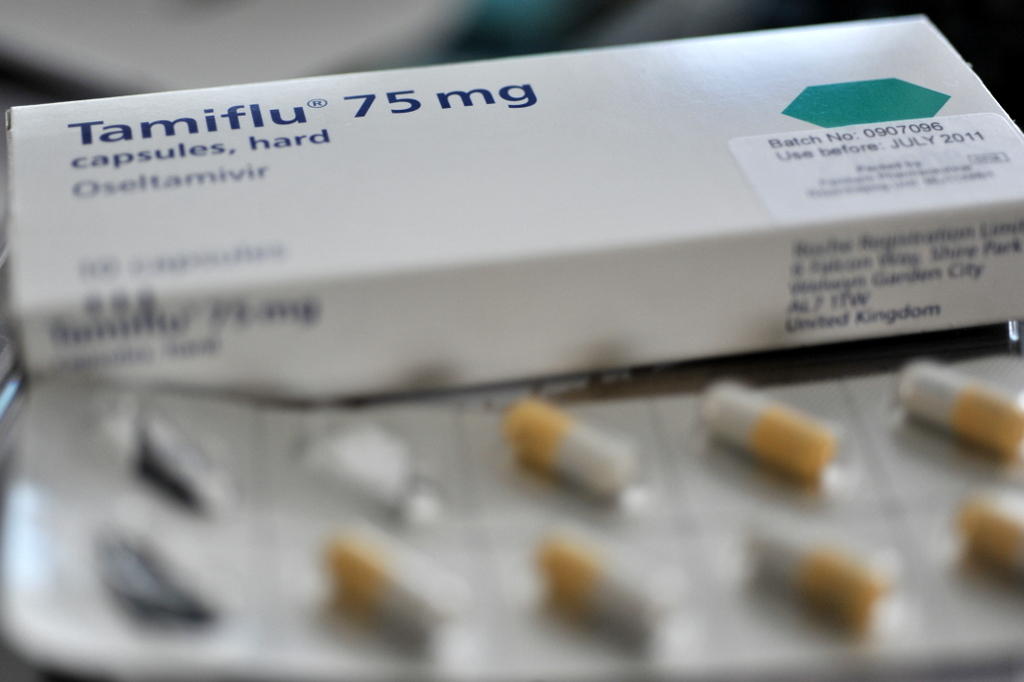
This winter, if your doctor suggests that you take Tamiflu, you might want to ask for a conflict of interest statement: a new study suggests that doctors who received payments from the makers of flu-fighting neuraminidase inhibitors—drugs like Tamiflu® and Relenza®—were more likely to view the drugs’ prowess in a favorable light.
While it’s been unclear for years whether these drugs really are effective against influenza, it was crystal clear that financial relationships are associated with positive reviews. Full story »
Privacy policies are a sore point for Internet users. At least once a year the pitchforks and torches come out when a company like Facebook or Twitter changes its policies around how it uses, sells or secures users’ data—things like browsing habits, phone numbers, relationships and email addresses.
You don’t hear as much hue and cry over the privacy of mobile health apps, where people store and track what are literally their most intimate details. But perhaps you should.
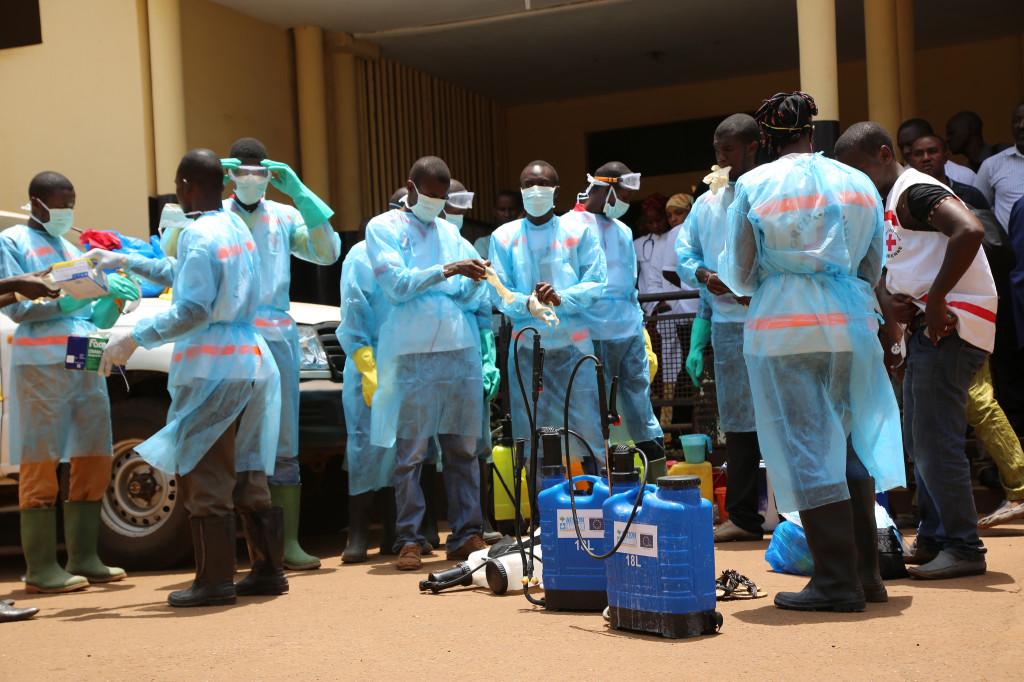
Guinean Red Cross volunteers prepare to decontaminate a hospital in the capital, Conakry. (European Commission DG ECHO/Flickr)
The world paused for a moment when the news broke last week that two Ebola-infected American missionaries working in Liberia had received an experimental therapy called ZMapp. As I write this, both patients are back on U.S. soil, and seem to be responding well to the treatment.
But was it ethical?
That difficult question can be divided into two. First is the question of whether it was ethical to give the two patients a drug that, up to that point, had never been tested in people. The second—in some ways thornier—question is: Was it ethical to give the treatment to two Americans but not the nearly 1,850 West Africans infected in the outbreak (as of August 11)? Full story »
Clinical excellence is the foundation of patient care. But at a recent TEDx Longwood event, Elaine C. Meyer, PhD, RN, co-founder and director of the Institute for Professionalism and Ethical Practice at Boston Children’s Hospital and an Associate Professor of Psychology at Harvard Medical School, offered insight on the other half of the health care equation: the human connection and the power of conversation.
Meyer’s moving presentation makes clear how communication—listening and sharing words of comfort—profoundly impacts patient experiences, as does its absence. Through heartfelt stories, including her own experience as a patient, her talk empowers physicians, nurses, social workers, psychologists and other medical staff to “be present” and communicate with patients and families compassionately.
“Dig deep, find your inspiration to have conversations,” Meyer says, because patients remember the words spoken to them and how those words made them feel.
In it, the pair reports that the FDA approved 20 attention deficit hyperactivity disorder (ADHD) drugs over the last 60 years without what would be considered sufficient long-term safety and rare adverse event data.
Their findings, they say, point to larger issues in how the FDA’s approval process addresses the long-term safety of drugs intended for chronic use in children. Full story »
The start of what promises to be a lengthy, multi-part endeavor has begun unfolding on Capitol Hill. It’s an attempt to reform the Medicaid program so that children with medical complexity (those with a single, serious medical condition, or multiple chronic conditions) can receive higher quality care with fewer emergency department visits and fewer hospital admissions.
When you think of medically complex children, think of children living with conditions such as spina bifida or cerebral palsy, children dependent on ventilators or feeding tubes, or children with genetic disorders. They represent just 6 percent of the 43 million children on Medicaid—yet they account for about 40 percent of Medicaid’s spending on children. Their care is often fragmented and poorly coordinated.
The drugs and treatments developed over the last 50 years have transformed many childhood cancers from death sentences into largely curable diseases. However, those same drugs and treatments can have lasting or late effects on many different organ systems.
Such is the case with anthracyclines: Patients treated with these chemotherapy agents have a greatly elevated future risk of congestive heart failure (CHF).
For this reason, the Children’s Oncology Group (COG)—which brings together pediatric cancer experts from around the globe—currently recommends screening childhood cancer survivors with echocardiography every year or two, depending on their level of anthracycline exposure, for signs of asymptomatic left ventricular dysfunction (ALVD). If left untreated, this clinically silent condition can progress to congestive heart failure.
But are we screening the right survivors at the right times using the right methods? Answering that question for cancer and CHF would require prospectively studying thousands of survivors (itself a challenge, given childhood cancer’s relative rarity) for decades, which is neither financially nor logistically feasible. Full story »
Last November, the U.S. Food and Drug Administration issued a “cease and desist” order to 23andMe, a major purveyor of direct-to-consumer (DTC) genetic testing. In its letter to the company—issued after three prior warnings—the FDA reiterated its view that 23andMe’s Personal Genome Service (PGS) constitutes a medical device requiring further premarket evaluation:
FDA is concerned about the public health consequences of inaccurate results from the PGS device…we still do not have any assurance that the firm has analytically or clinically validated the PGS for its intended uses.
The FDA’s order, based on potential rather than actual medical harm, has generated a great deal of controversy. In a recent critique published in Nature, Robert Green, MD, MPH, of the Partners HealthCare Center for Personalized Genetic Medicine, and Nita Farahany, PhD, JD, of the Duke Institute for Genome Sciences and Policy, argued against regulating DTC genomic interpretation services as medical devices:
… doing so could put FDA regulations in greater tension with the First Amendment of the US Constitution, which protects the rights of individuals to receive information, and of ‘commercial speech’ ….the agency should avoid restricting consumer genomic testing unless faced with empirical evidence of harm.Full story »