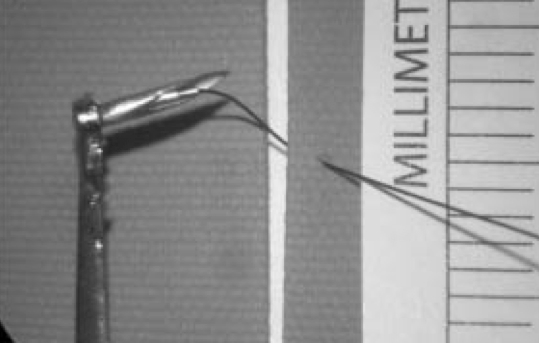
A magnetic needle and thread lets surgeons maneuver in tight spots.
The current method of suturing used in surgery—stitching with a needle and thread—has been around for thousands of years.
Kaifeng Liu, MD, a research fellow at Boston Children’s Hospital, hopes to reimagine this fundamental operating room practice. His workbench is filled with various prototypes of a magnetic needle, a device he hopes will make suturing simpler, faster and more efficient for researchers and clinicians alike.
“Sometimes it is the simplest things in medicine that stay the same over time,” says Liu, whose invention will be featured later this week at Boston Children’s Hospital’s Global Pediatric Innovation Summit + Awards 2014 (October 30-31). Full story »

This array of sensors surrounding a baby's head will give researchers and eventually clinicians a high-resolution image of neural activity.
Imagine you’re a clinician or researcher and you want to find the source of a newborn’s seizures. Imagine being able to record, in real time, the neural activity in his brain and to overlay that information directly onto an MRI scan of his brain. When an abnormal electrical discharge triggered a seizure, you’d be able to see exactly where in the brain it originated.
For years, that kind of thinking has been the domain of dreams. Little is known about infant brains, largely because sophisticated neuroimaging technology simply hasn’t been designed with infants in mind. Boston Children’s Hospital’s Ellen Grant, MD, and Yoshio Okada, PhD, are debuting a new magnetoencephalography (MEG) system designed to turn those dreams into reality. Full story »
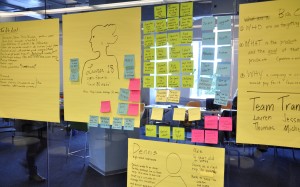
Parents, clinicians, app developers, designers and more had 18 hours to prototype digital healthcare solutions at Hacking Pediatrics, produced by Boston Children’s Hospital and MIT Hacking Medicine. To accompany our earlier post, we created this Storify. Full story »
(Dana Hatic for MedTech Boston)
What are the pain points in pediatrics? There are at least 37: the number of clinicians, parents and others who lined up at the podium last weekend to pitch
problems they hoped to solve at the second annual
Hacking Pediatrics.
The hackathon, produced by Boston Children’s Hospital in collaboration with MIT Hacking Medicine, brought out many common themes: Helping kids with chronic illnesses track their symptoms, take their meds and avoid lots of clinic visits. Helping parents coordinate their children’s care and locate resources. Helping pediatric clinicians make better decisions with the right information at the right time.
Hackathons have a simple formula: Pitch. Mix. Hack. Get Feedback. Iterate. Repeat—as many times as possible. Full story »

Start your engines: A fleet of GoBabyGo cars, customized by therapists and parents to give disabled children mobility and help strengthen weak muscles. (Courtesy Cole Galloway)
TEDMED2014 focused on a powerful theme: unlocking imagination in service of health and medicine. Speaker after speaker shared tales of imagination, inspiration and innovation. Here are a few of our favorites:
$100 plastic car stands in for $25,000 power wheelchair
In the first (and likely only) National Institutes of Health-funded shopping spree at Toys R’ Us, Cole Galloway, director of the Pediatric Mobility Lab at the University of Delaware, and crew stocked up on pint-sized riding toys.
Galloway’s quest was to facilitate independence and mobility among disabled children from the age of six months and older and offer a low-tech solution during the five-year wait in the United States for a $25,000 power pediatric wheelchair.
The hackers jerry-rigged the toys with pool noodles, PVC pipe and switches, reconfiguring them as mobile rehabilitation devices to promote functional skills among kids with special needs. Full story »
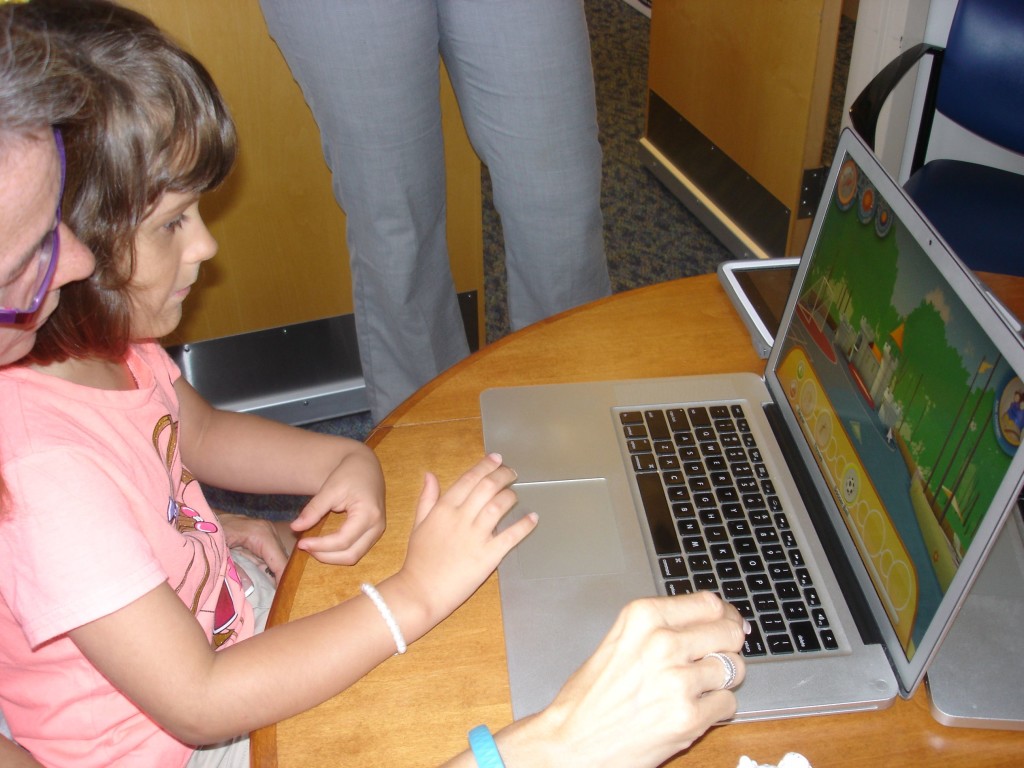
With initial help from her mother, Kailee West, 6, quickly masters the basics of Puddingstone Place, an interactive virtual environment that helps children with autism develop language skills.
In the 1990s, Facilitated Communication (FC), in which assistants “facilitate” the typing of thoughts by minimally verbal children by supporting their hands, began raising hopes in the autism community. The unproven procedure caught fire, and Syracuse University established a nationally recognized Facilitated Communication Institute.
Upon closer examination, though, doubts emerged. The messages were surprisingly sophisticated and written by children who often were not even looking at the keyboard. Critics charged that the words were actually those of the facilitator rather than the patient. Studies and organizations began discrediting FC. Full story »
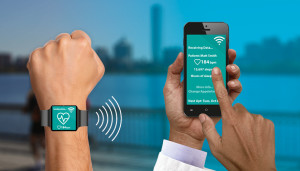
Fitbit, Jawbone, Nike, Withings…a lot of companies are already in the wearable/mobile health technology and data tracking game. But a couple of really big players are stepping on to the court.
At their most recent Worldwide Developers Conference, Apple announced both an app and a framework—Health and HealthKit—that will tie in with various wearable technologies and health apps. HealthKit will also feed data into electronic medical record (EMR) systems like Epic, which runs at some of the largest hospitals in the country. And rumors abound that an upcoming Apple smartwatch (iWatch? iTime? Only Tim Cook knows right now) will carry a host of sensors for tracking activity and health data.
Google also wants to get into the game with a health data framework called Fit that they announced at their I/O conference in June. Unlike Apple, its strategy seems more focused on providing a standard way for trackers, devices and apps from different manufacturers to talk to Android Wear devices.
What will entry of these big players mean? We asked Michael Docktor, MD, clinical director of Boston Children’s Hospital’s Innovation Acceleration Program. Full story »
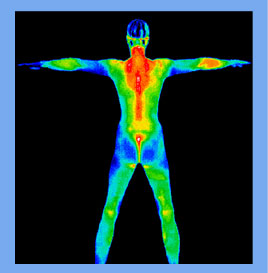
(Pyh2/Wikimedia Commons)
Geoffrey Horwitz, PhD, is a business development associate in the Technology and Innovation Development Office (TIDO) at Boston Children’s Hospital. Follow him on Twitter @GeoffHorwitz
At the recent 2014 Biotechnology Industry Organization (BIO) International Convention, the message was clear: Digital health is the new blockbuster. For the first time ever, BIO spotlighted digital health, with a specific focus on how digital health is influencing the pharmaceutical and biotech industries. Also featured was a digital health zone where companies and other exhibitors from all over the world could demo their products and services to thousands of attendees.
In pharmaceutical lingo, a blockbuster is a drug that generates revenues of at least $1 billion. Digital health certainly fits this definition. By 2018, reports suggest that revenues will exceed $6 billion for wearable wireless devices alone. A recent McKinsey study found that 75 percent of consumers surveyed, of various ages and located throughout the world, would like to use digital health devices. Full story »
 Projections that the global mobile health market will boom to nearly $50 billion have ignited interest among innovators. A pair of physician innovators from Boston Children’s Hospital peg wearables as the technology to watch and offer a sneak peek at what adoption might mean, while others ask about the pediatric market for wearables and point to a few potential stumbling blocks. Read on for their views. Full story »
Judy Wang, MS, is a program manager in the Telehealth Program at Boston Children’s Hospital. She is currently serving on the Mayor’s ONEin3 Council, which works on projects dedicated to maximizing the positive impact that young people have on the City of Boston.
(ITU/Rowan Farrell creativecommons.org/licenses/by/2.0/legalcode)
If you Google the term “millennials,” you’ll see that Google automatically fills in such search terms as “millennials lazy,” “millennials spoiled,” “millennials trophy kids” and “millennials entitled.” Ouch.
As part of the Mayor’s ONEin3 Council and a Founding Hacker for MIT’s H@cking Medicine, I could not disagree more with this assessment of my generation. I’ve observed young people increasingly drawn to civically minded work with public impact—including work in health tech. Full story »